
Birth Trauma Therapy in Bergen County, NJ
Maybe it's the moment no one answered you. Maybe it's the sound of the monitor, or the hands on your body, or the decision made about you while you were still in the room. Maybe you left that day without the baby, without your uterus, without the birth you'd planned for — or with everything intact and a feeling you can't explain to anyone.
Your body logged it as danger. It hasn't stopped bracing since.
That's not weakness and it isn't ingratitude. It has a name, and it responds to treatment.
You are not alone in this
Roughly 1 in 3 birthing parents describe their birth as traumatic in some way. Birth trauma is not defined only by medical emergencies. It can result from feeling dismissed, powerless, or physically violated during labor and delivery, even when the outcome was "fine."
Because the baby may be healthy, birth trauma tends to go unacknowledged or gets minimized, by family, by providers, sometimes by the parent themselves. Many describe a strange guilt about their own suffering, a sense they are not allowed to be upset because the outcome, on paper, was good. That gap is exactly where this birth trauma can live.
What it actually feels like
Birth trauma often shows up as intrusive memories or flashbacks to specific moments of the birth, arriving during ordinary moments like changing a diaper and especially at the thought of a follow-up appointment or need for medical care. Some find themselves unable to talk about the birth at all, going numb when it comes up. Others feel dread about future medical settings or a subsequent pregnancy, and avoid their 6-week check up.
There is often anger or grief with nowhere to go: at how a provider spoke to them, at the birth experience they imagined and did not get. This can coexist with love for the baby. Holding both at once is part of what makes birth trauma so disorienting.
Signs you or someone you love might recognize:
- Intrusive memories, images, or flashbacks related to the birth
- Avoidance of talking about the birth, or of medical settings altogether
- Persistent anger, grief, or shame connected to how the birth unfolded
- Hypervigilance around future pregnancies or medical care
- Emotional numbness when the topic of the birth arises
- Physical tension or panic triggered by reminders of the delivery
How this differs from postpartum depression or anxiety
Birth trauma and postpartum depression or anxiety can occur together but are distinct. Birth trauma centers on the birth itself, and its symptoms, intrusive memories, avoidance, hyperarousal, mirror post-traumatic stress rather than depression. Many moms who have traumatic births experience PPD or PPA.
A parent can have an easy postpartum recovery and still carry birth trauma from one frightening moment. An accurate conversation with a perinatal-trained clinician shapes which direction treatment takes.
When to reach out
You do not have to be in crisis to reach out. Many assume that because the baby is healthy, they have no right to be affected by how the birth happened. That belief keeps people carrying this silently for years.
We understand the hesitation: fear that talking about it will make it more vivid, or that a provider will minimize it the way others already have. Processing birth trauma does not mean reliving it unprotected. It means finally being met with the seriousness it deserved.
How we treat this at AWOH
Our primary approach is EMDR, Eye Movement Desensitization and Reprocessing, which helps the brain process memories that got "stuck" in their original, high-distress form. EMDR does not require recounting every detail out loud. Kara Kushnir, our Clinical Director, is EMDR-certified and PMH-C certified, holding the perinatal context, hormonal recovery, breastfeeding, sleep deprivation, alongside the trauma work. She trains providers in hospitals, doulas and nurses to try and prevent traumatic births, and leads our perinatal trauma training work.
We also make room for grief, anger, and identity disruption, including grief for the birth experience expected but not had. For those anticipating a future pregnancy, we work on processing fear from a prior birth so it does not dominate the next one.
What the first appointment looks like
Your first step is calling or filling out a contact form so we can match you with a potential therapist. From there, the first full session functions as an intake, gathering history, symptoms, and context about your birth and support system. And a note about match - we don't just give you a therapist with an opening - we intentionally pair providers' skill set with the client's needs.
Sessions are available in person at Allendale and Oradell, or via telehealth across NJ and other states, and you can even do a mix of in-person and virtual if needed!
If part of you is still back in that delivery room, that deserves attention.
Secure your free consultation
and let's talk about what processing this could look like.
Related pages
Meet the team
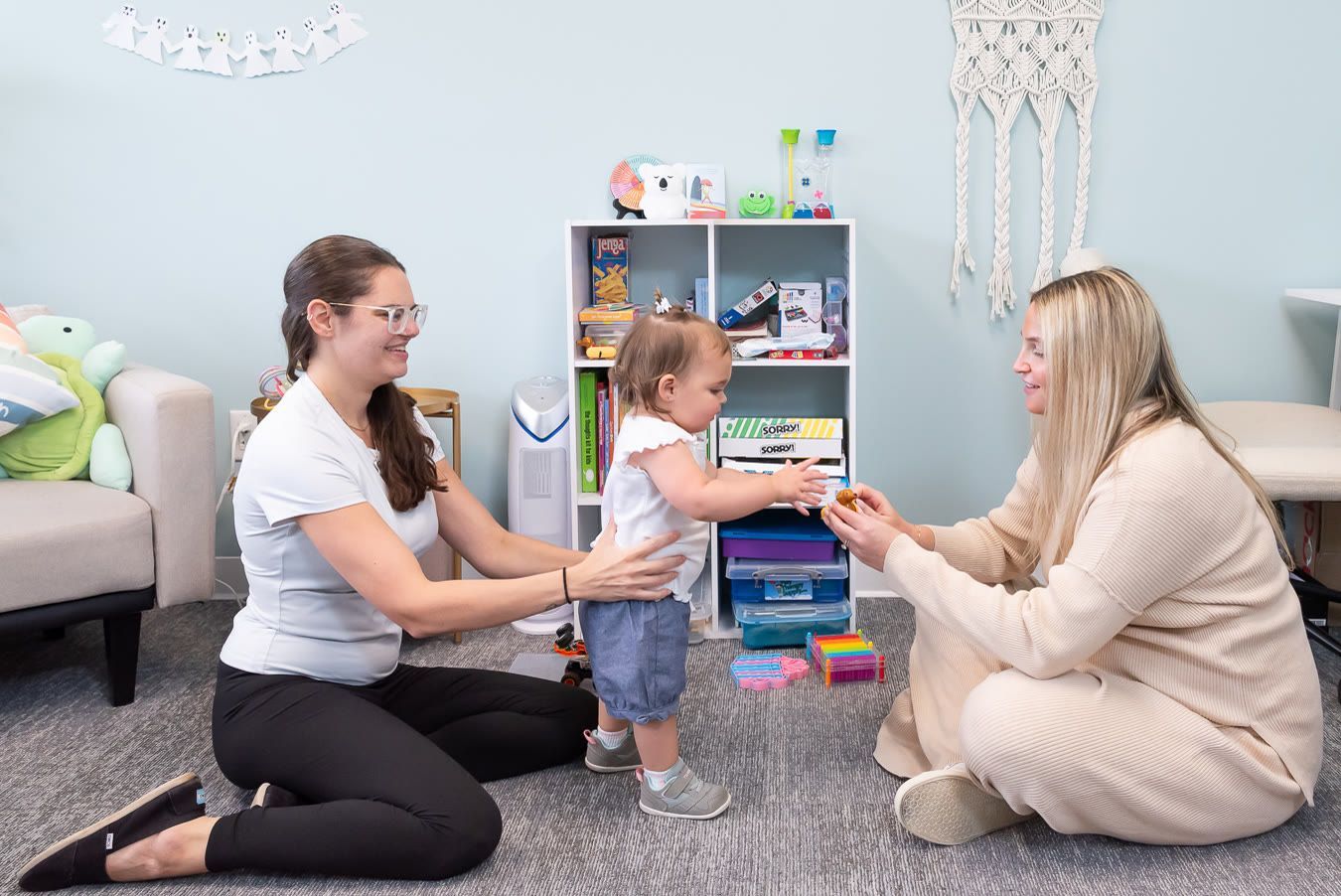
Our reproductive and perinatal mental health team includes EMDR-trained, PMH-C certified clinicians experienced in birth trauma recovery.
How to get started

1.
Reach out: call (551) 233-2310 or request a free consultation
2.
Get matched with a perinatal specialist whose skills fit your needs
3.
Your first session: a gentle intake about your history, birth, and support system
4.
Begin healing in Allendale, Oradell, or by telehealth
Frequently asked questions
Answers to the questions we hear most often about birth trauma and starting therapy.
What counts as a traumatic birth?
Trauma is in the eye of the beholder - that means that if you feel your birth affected you, it counts. 1 in 3 new moms will perceive their birth as traumatic, and anything from unwanted interventions to poor provider treatment, NICU stays, unwanted c-sections or medical emergencies can be traumatic.
Can a birth be traumatic even if my baby is healthy?
Absolutely - a healthy baby does not erase a frightening or dehumanizing experience. That distress deserves attention on its own terms - parents matter just as much as their babies.
How is birth trauma different from postpartum depression?
Birth trauma centers on the birth event and produces trauma symptoms: intrusive memories, avoidance, hyperarousal. Postpartum depression involves persistent low mood not tied to a single event. The two can occur together.
Does EMDR require describing every detail of my birth?
No. EMDR reduces the emotional intensity of a memory without requiring a full verbal account. Many find this more manageable than traditional talk therapy because you do not have to tell us every detail of your birth story unless you want to!
Do you accept insurance for birth trauma therapy?
We work with out of network benefits (which most PPO insurance plans have). For those without coverage, we offer sliding scale/reduced fee services as well through our graduate-student clinician program where students are trained directly in perinatal mental health.
How soon can I be seen?
Our goal is to get clients in within a week of reaching out, if not sooner! If we cannot see you within a week or so, we offer a warm hand off and referrals to other trusted perinatal professionals who may be a good match!
Do you offer telehealth for birth trauma therapy?
Yes, throughout New Jersey and several other states.
Will processing this affect a future pregnancy?
Addressing birth trauma before a future pregnancy often reduces fear going into a subsequent birth. Many pursue this specifically to feel more prepared and steady approaching it.
What happened in that delivery room deserves to be taken seriously
Processing it means finally putting it down. Secure your free consultation today. Call (551) 233-2310, complete our appointment request form below, or reach out via telehealth. We see clients at our Allendale and Oradell, NJ offices, and virtually across several states.